🔬 In photonic sensing, performance is not determined by the best channel — but by the worst one.
As integrated photonics moves toward multi-channel sensing architectures with increasing numbers of optical fibers, two parameters become critical:
• Low optical loss per channel
• Consistent optical loss across all channels
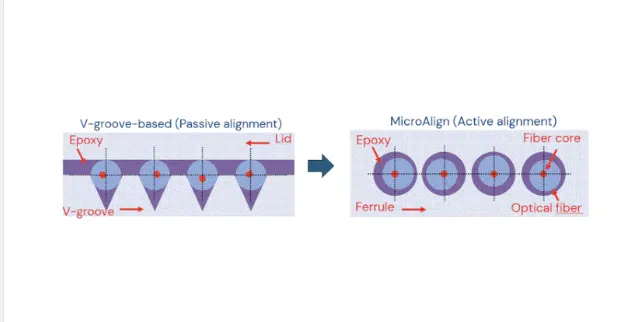
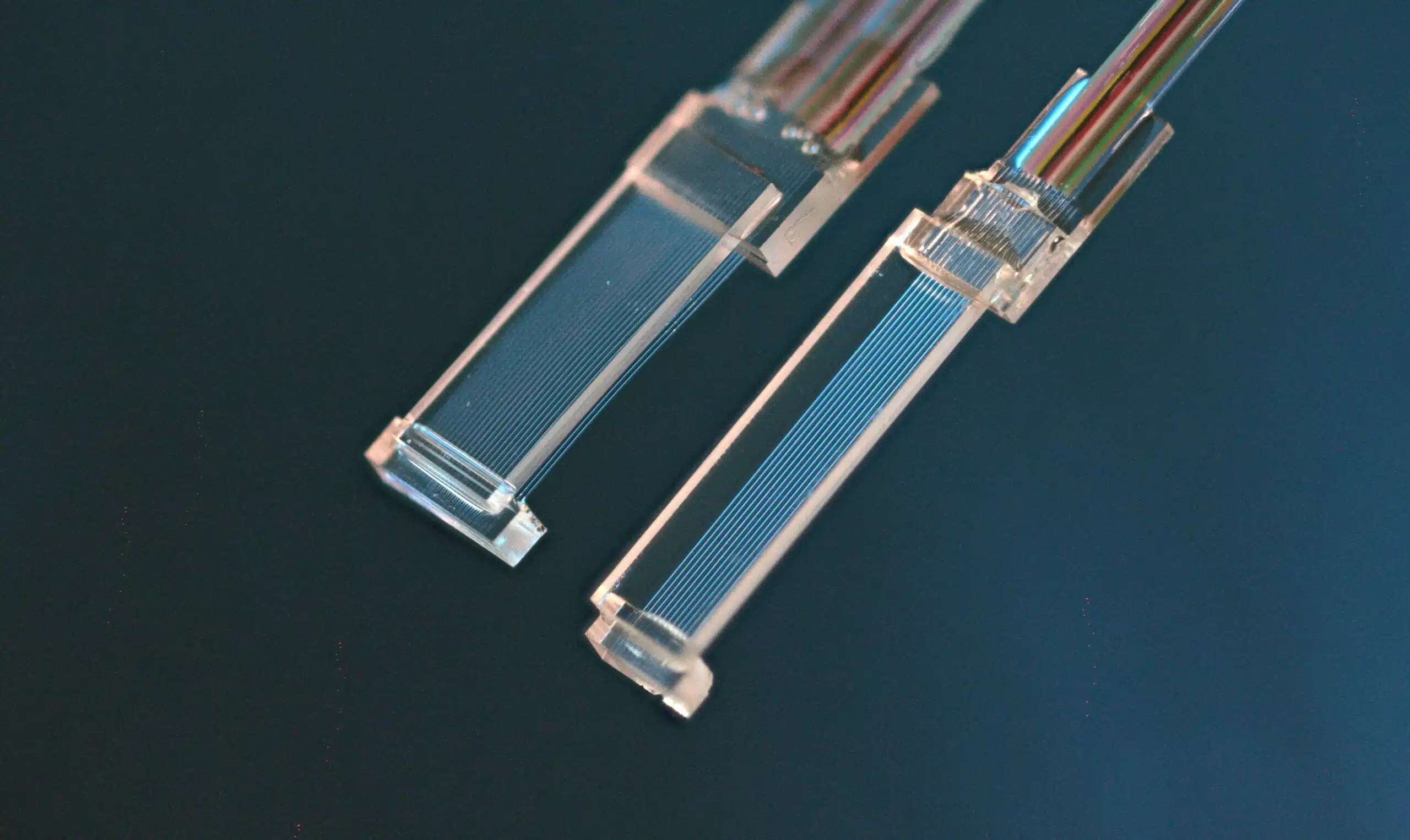
This is exactly where MicroAlign’s active-aligned fiber arrays make the difference.
By achieving nanometer-precision fiber core positioning and near-perfect pitch accuracy, our fiber arrays significantly reduce coupling loss while also improving channel-to-channel uniformity when coupling to photonic integrated circuits (PICs).
Why does this matter for sensing?
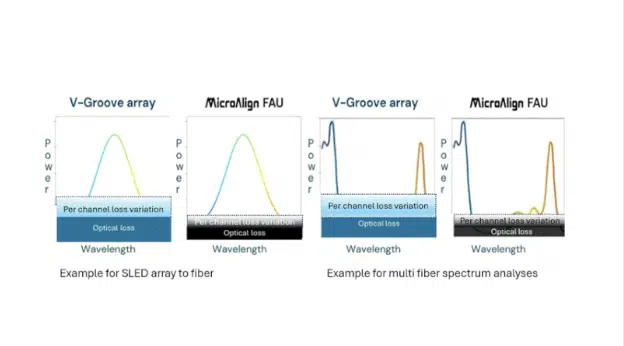
Because lower and more consistent losses directly translate into improved dynamic range.
A lower-loss channel can detect weaker optical signals, increasing sensitivity. But equally important: tighter channel uniformity improves the performance of the worst-performing channel in large multi-fiber systems.
For these types of sensing products produced in series, the guaranteed system performance is often defined by that worst channel within many products.
This means that better fiber array uniformity helps:
• Increase the guaranteed dynamic range of the full product
• Improve measurement consistency across channels and devices
• Enable scalable multi-channel spectral sensing architectures
• Reduce calibration complexity and performance spread between systems
As photonic sensing systems continue scaling in channel count and complexity, packaging precision becomes increasingly important.
At MicroAlign, we believe the future of high-performance sensing will not only be driven by better PICs — but also by better optical connectivity.
Better alignment does not only reduce loss. It improves the usable performance envelope of the entire sensing system.
Author: Dario Lo Cascio Program Manager at MicroAlign